Welcome to Château Coupe-Roses
Château Coupe-Roses is located in the village of La Caunette (Hérault), within the Minervois appellation, at the first foothills of the Montagne Noire. Our vines thrive on vast clay-limestone plateaus. Between 250 and 400 meters above sea level, in a climate that favors the preservation of aromas and acidity, we cultivate our vineyards using biodynamic agriculture.
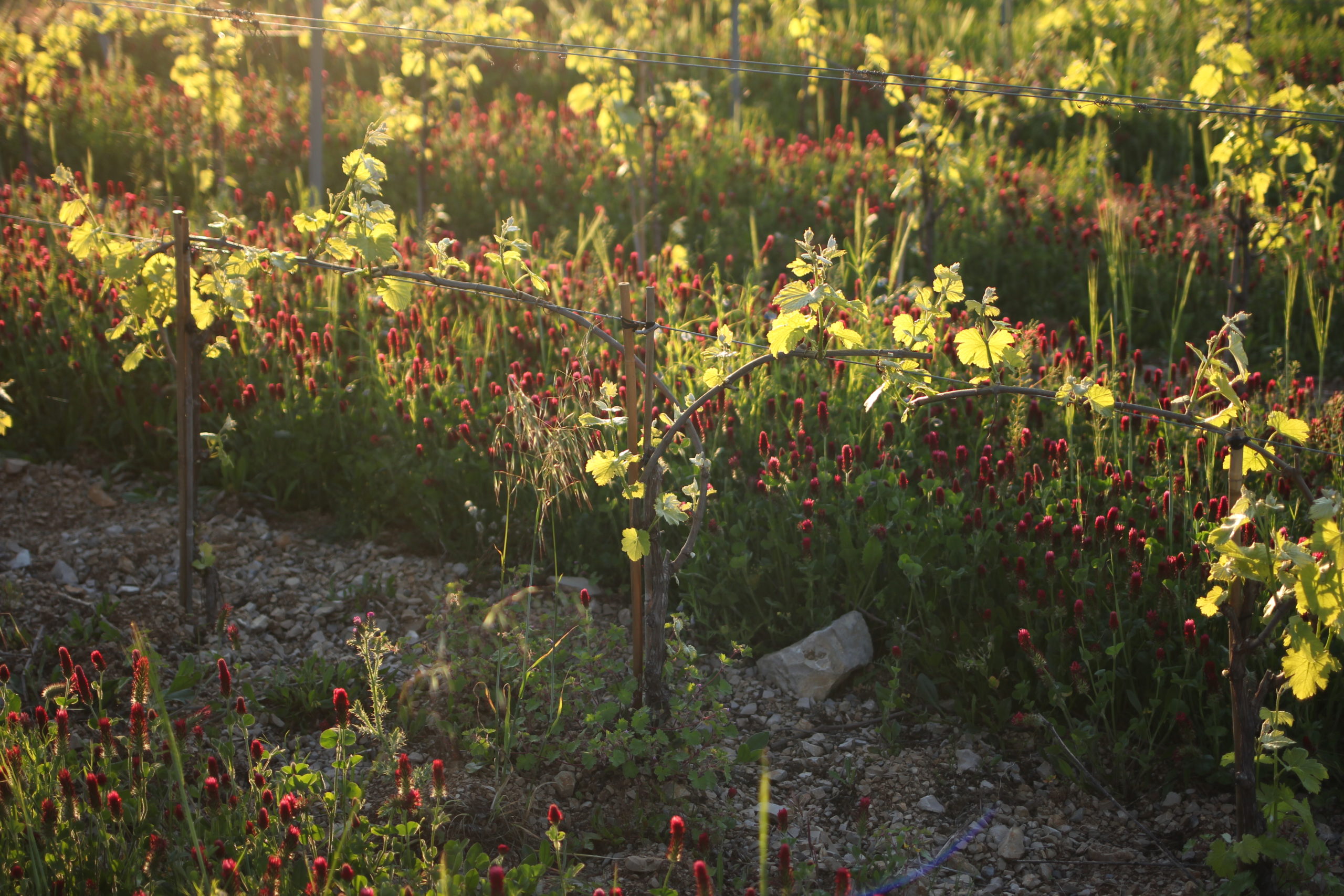
The quality of the wine begins in the vineyard. From this principle arise our cultivation practices: working the soil is essential, as it allows the vine to take lasting root in its environment. The biodynamic treatment of the vine ensures the preservation of an ecosystem. All these elements contribute to producing a unique raw material, born from our terroir, which can then express itself through our winemaking — carried out as naturally as possible.
We use no additives, except for one to two grams of SO2 at bottling on certain cuvées. We are committed to ensuring that our natural wines are free of flaws, in order to preserve above all the expression of the terroir we seek. On these limestone plateaus, we work particularly on mouthfeel and texture rather than on aromatic intensity or a simple expression of fruit. This involves specific winemaking techniques, some using whole clusters, all fermented at low temperature, and generally with short macerations of about a week. For us, it is important to preserve the energy of the wine, racking it while it is still warm and cloudy rather than cold and clear.
For several years, we have been striving to limit as much as possible the effects of climate change on our vines. This involves deep reflection on our viticultural techniques, starting with plant material. For many years, all our new plantings have been “complanted,” meaning we mix grape varieties randomly within the same plot, so that the blending happens in the vineyard rather than in the cellar. This allows us to highlight the soil rather than the grape variety’s expression. We now prefer to replant the indigenous grape varieties that, in our trials, have proven to be more resistant to drought than others. We have planted Aramon, Ribayrenc, Piquepoul Noir, and Clairette Rose, which are themselves interplanted with a multitude of other varieties (Brun Fourca, Marocain Noir, Terret, Alicante, etc.). The rootstocks are adapted to the local climate — 110R, Rupestris du Lot, 1103 Paulsen, for example. We now favor planting low-trained goblet vines (about 30 cm above the ground).
The soil is hardly worked at all; only one or two superficial hoeings are done at the end of spring and beginning of summer. We avoid trimming to allow the vine to complete its vegetative cycle instead of forcing it to produce secondary shoots. Treatments are based on sulfur and copper, essential oils, herbal teas, fermented extracts, and plant purins. We apply no fertilizers, even organic ones, because we prefer to nourish the soil rather than the plant. To do so, we occasionally spread small amounts of manure mixed with wood chips, in light doses to avoid nitrogen deficiencies. All this helps promote low pH levels in the wines and makes our additive-free winemaking easier.
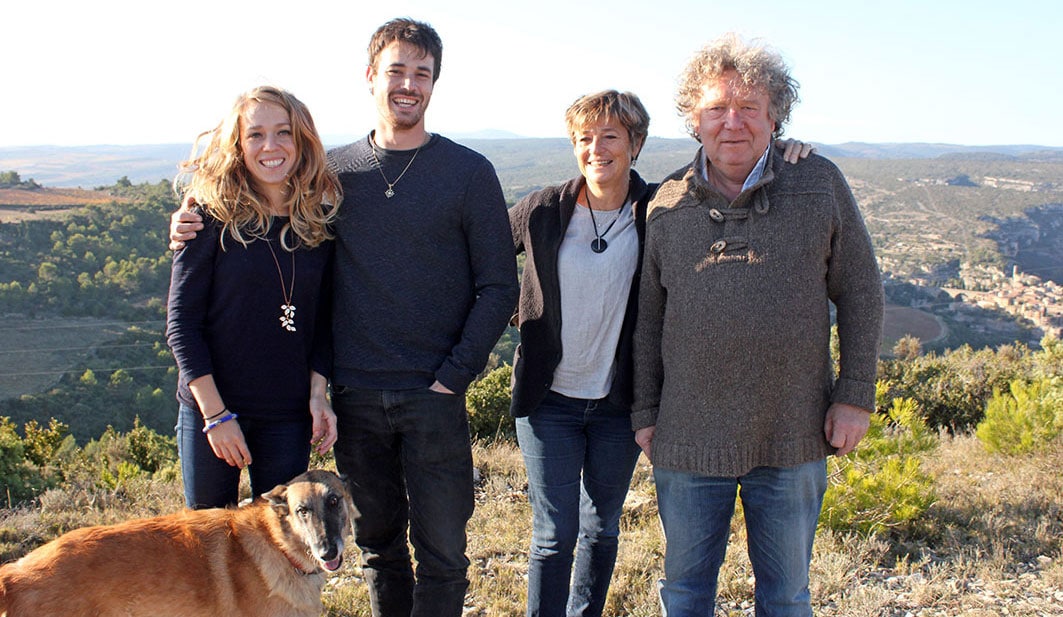
We place great importance on the aesthetics of the vineyard. As farmers, we shape the land; we inherit this landscape and are partly responsible for it. Our father used to say that a beautiful vineyard makes good wines. It is this philosophy that guides us when creating new plots or maintaining existing ones. We carefully consider the surroundings — the dry-stone walls, hedgerows, tree plantings, and plot sizes — so that our vines fit harmoniously into the landscape mosaic that defines our terroir, between forests, garrigue, and limestone cliffs.
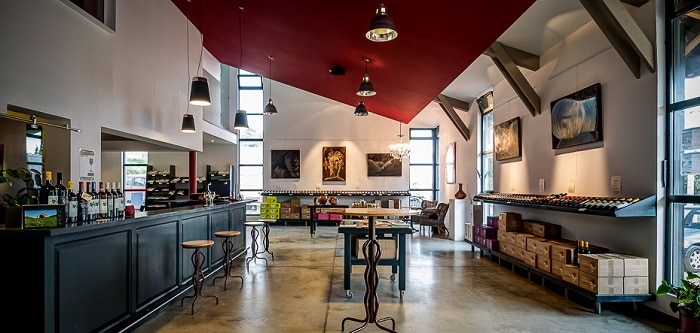
We invite you to discover our sensorial poetry universe. It belongs to you to come and share this universe with us.
TEAM