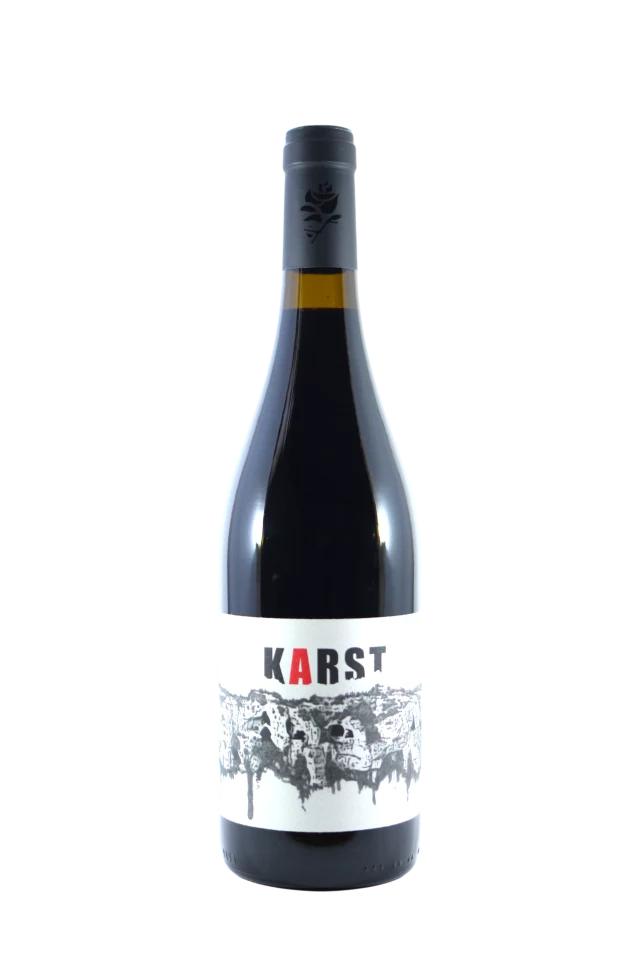
Karst
From selected plots on our karstic terroirs.
 Château Coupe-Roses
This website presents and sells alcoholic beverages. Alcohol cannot be sold to minors.
Your choice is saved on this device for 30 days.
A vineyard site conceived as a whole, as a place in its own right: stone breaks through the surface, light floods everything, and the wind scarcely ever stops.
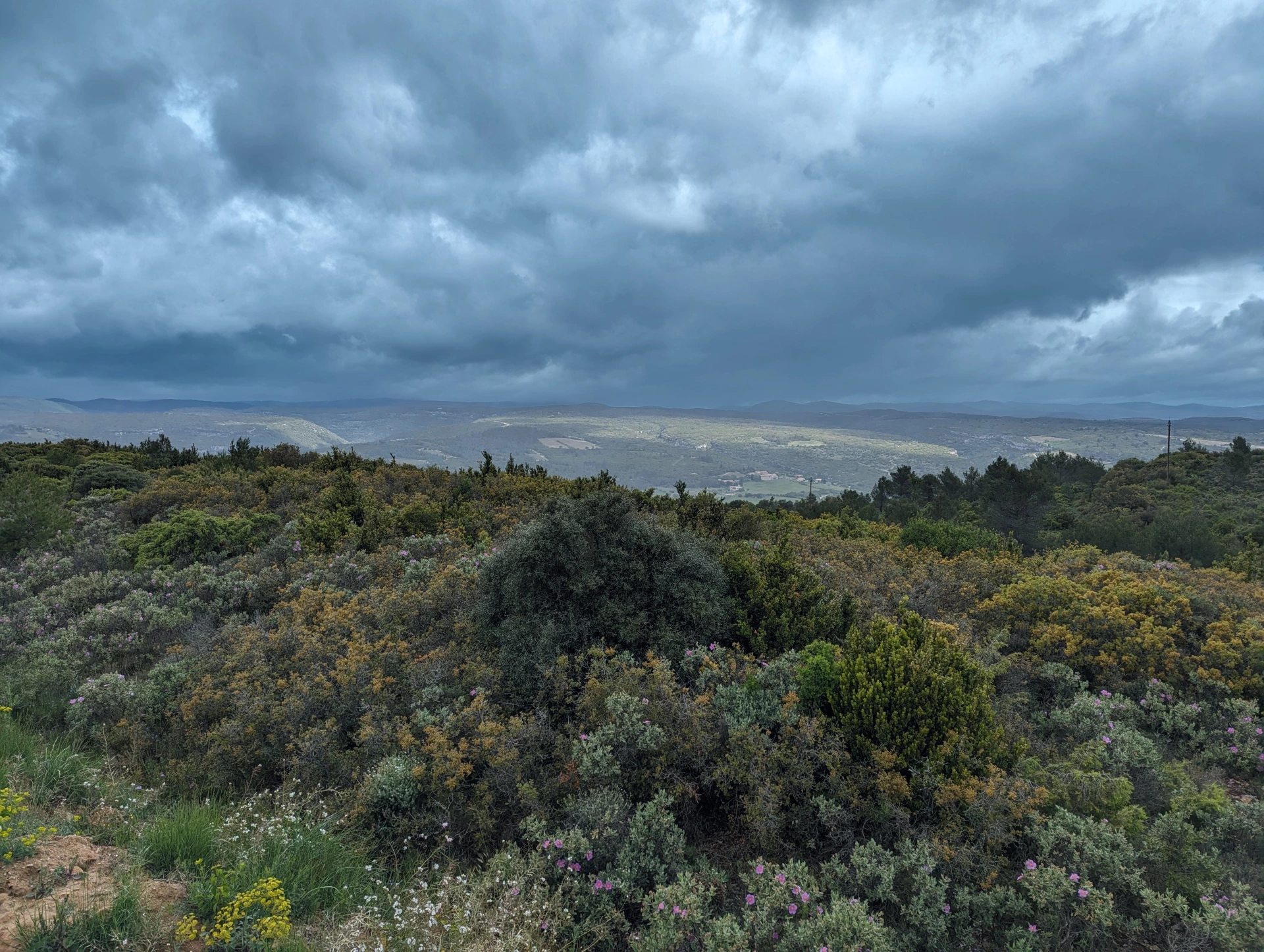
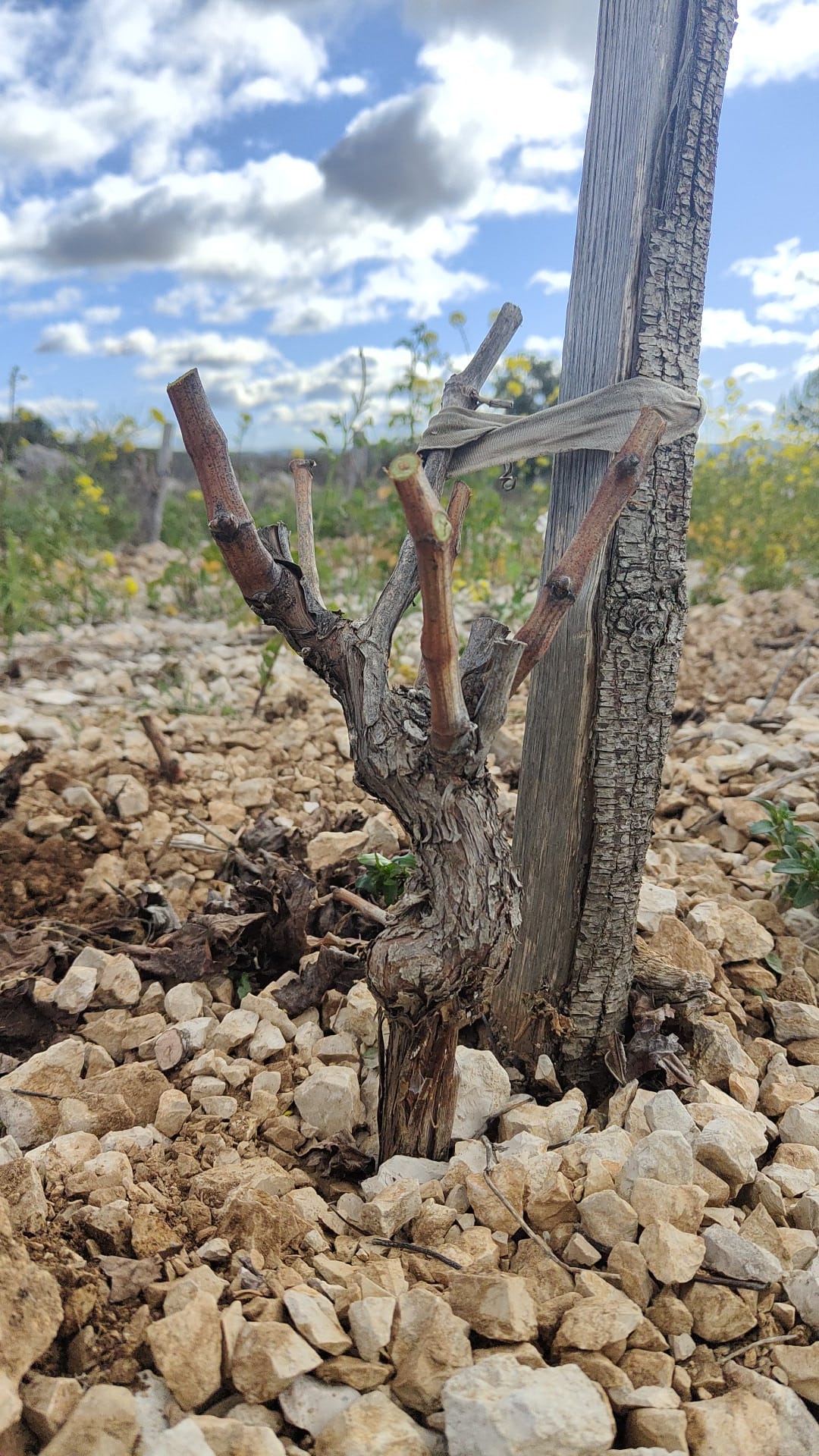
On Sur le Causse, the lacustrine limestone has weathered extensively, and the surface is so stony that the soil almost disappears. Sometimes one must dig several dozen centimetres to reach brown earth, mixed with stones and very rich in stable organic matter.
The soil pH is extremely high, around 9. This alkalinity affects the availability of certain minerals and contributes to the distinctive balance found in the grapes and wines. Here the wines retain high acidity despite their ripeness, and the fruit is wonderfully vivid in the glass.
The soil is clay-rich and stores water that infiltrates quickly through the layer of stones. Those same stones then act as a natural mulch, preventing it from evaporating too rapidly.
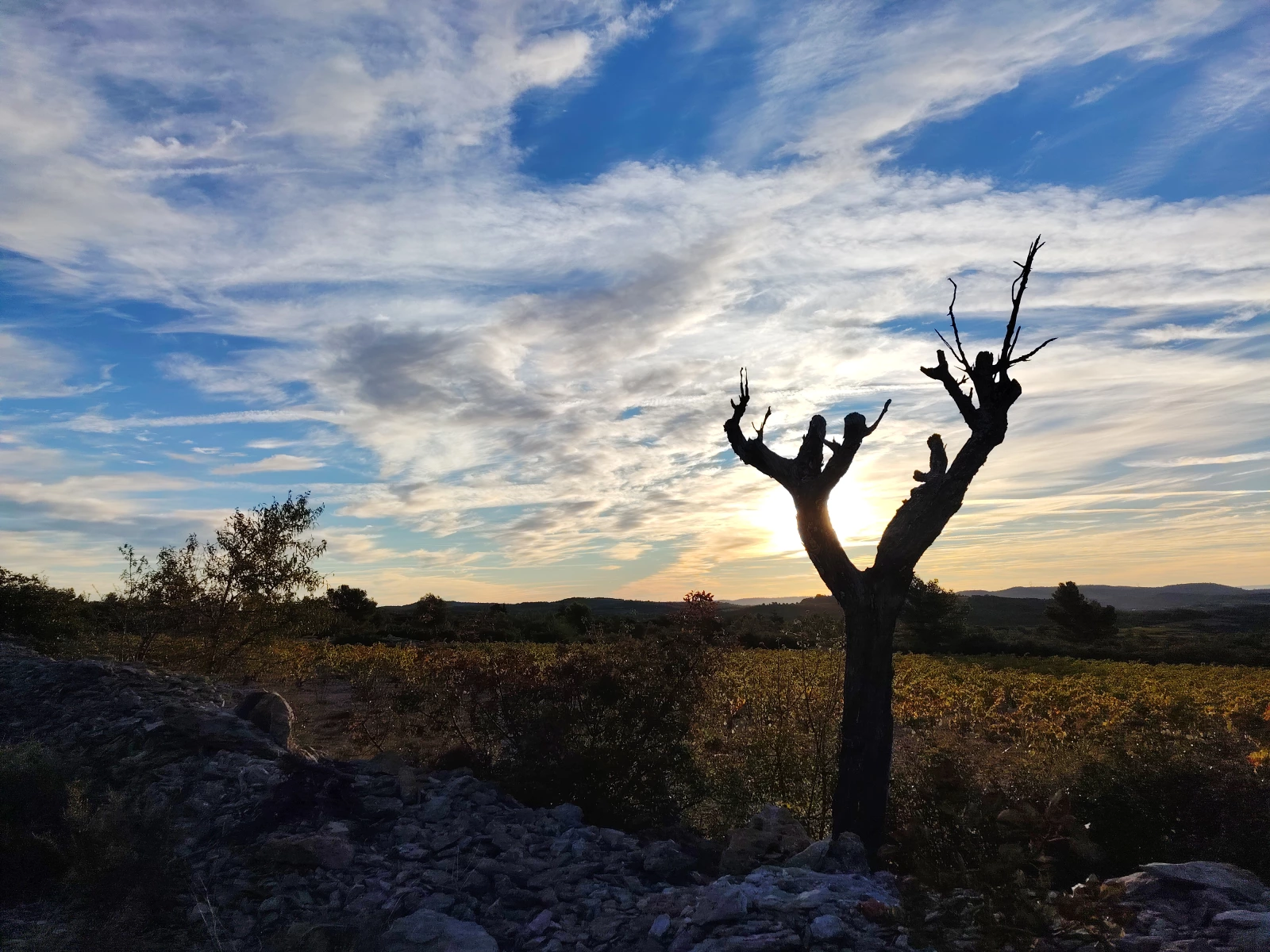
The landscape forms a broad plateau gently sloping towards the southeast. Vegetation remains low, adapted to the wind, heat and drought. In spring, honeysuckle, blue aphyllanthes, snapdragons, pink garlic and everlasting flowers bring colour to the white stones, and the Causse comes alive.
Light is everywhere, intensified by the limestone. At dawn and dusk it reveals striking contrasts; on summer days it can become overwhelming, engulfing everything it touches. The wind sweeps almost continually across the plateau, forcing the vegetation to grow stronger.
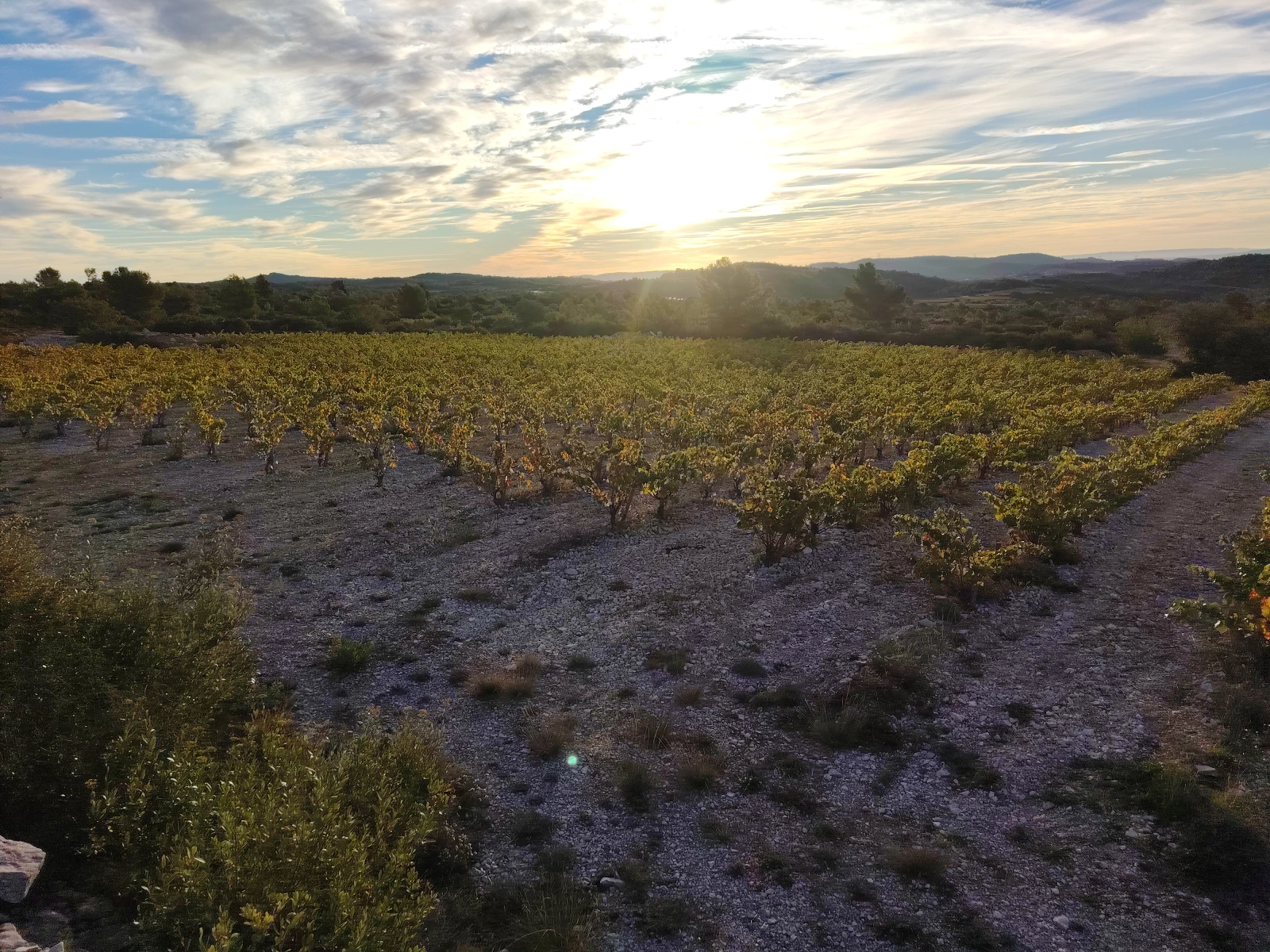
Each plot has a principal grape variety—Grenache Gris, Grenache Noir, Aramon, Ribeyrenc, Piquepoul or Cinsault—interplanted with many other varieties suited to the climate, including old and local grapes. This site includes Brun Fourca, Bun Argenté, Counoise, Marocain Noir, Alicante Bouschet, Morrastel, the Terrets, Oeillade and many more.
Our aim is to bring out the soil and the character of the place rather than the primary aromas of any one variety. In this way, we give the soil more ways to reveal itself through the grapes it yields. Each plot finds its balance through secondary varieties that complement the principal grape. Castets, Morrastel, Mourvèdre and Grenache bring body, roundness and a little acidity to Aramon. Ugni Blanc, Counoise, Cinsault and the Terrets lend Grenache juiciness and tension while moderating its warmth.
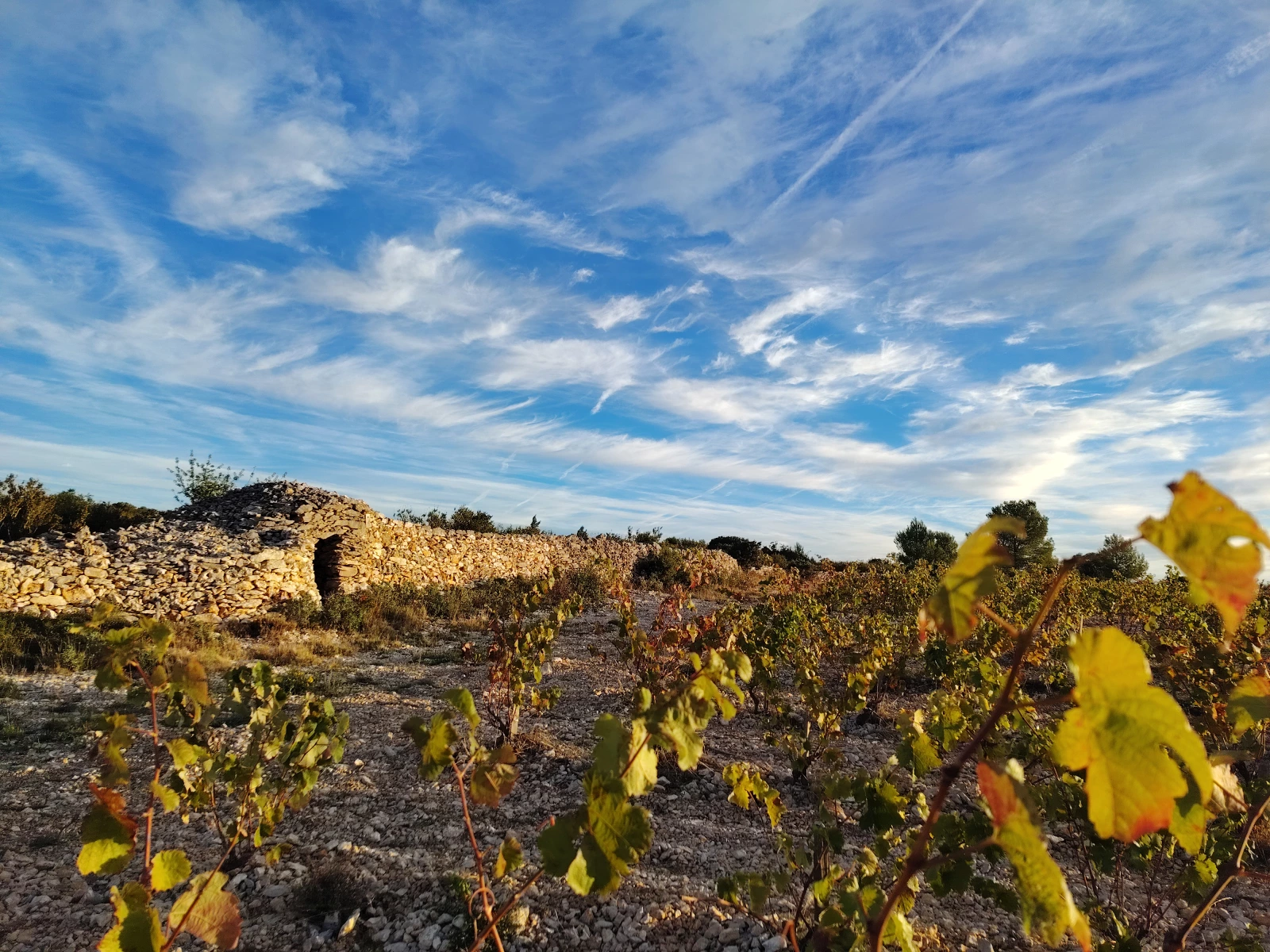
We have preserved the dry-stone walls, the small groves within vineyard plots and the natural hedgerows. Little by little, we rebuild fallen walls and repair damaged capitelles, the traditional dry-stone shelters.
Trees have been planted along the edges and in a few key locations, including an almond tree at the bottom of a clapas—a pile of stones—in the middle of a vineyard. In a few years it will be a beacon, spreading its white blossoms among vines still dormant from winter.
Our vineyards are not intended to replace the landscape, but to become part of it. Asking land to produce wine puts it into a state of imbalance; wherever possible, we try to restore a balance that cannot simply exist of its own accord. The challenge is to integrate the vine into its surroundings, continuing the landscape rather than dividing it up.
On these seemingly inhospitable limestone plateaux, where wind, heat and stone appear to dominate everything, biodiversity nevertheless flourishes. The limestone walls shelter many insect species, while the plants that grow here are highly aromatic, rich in the essential oils that help them withstand this harsh climate.
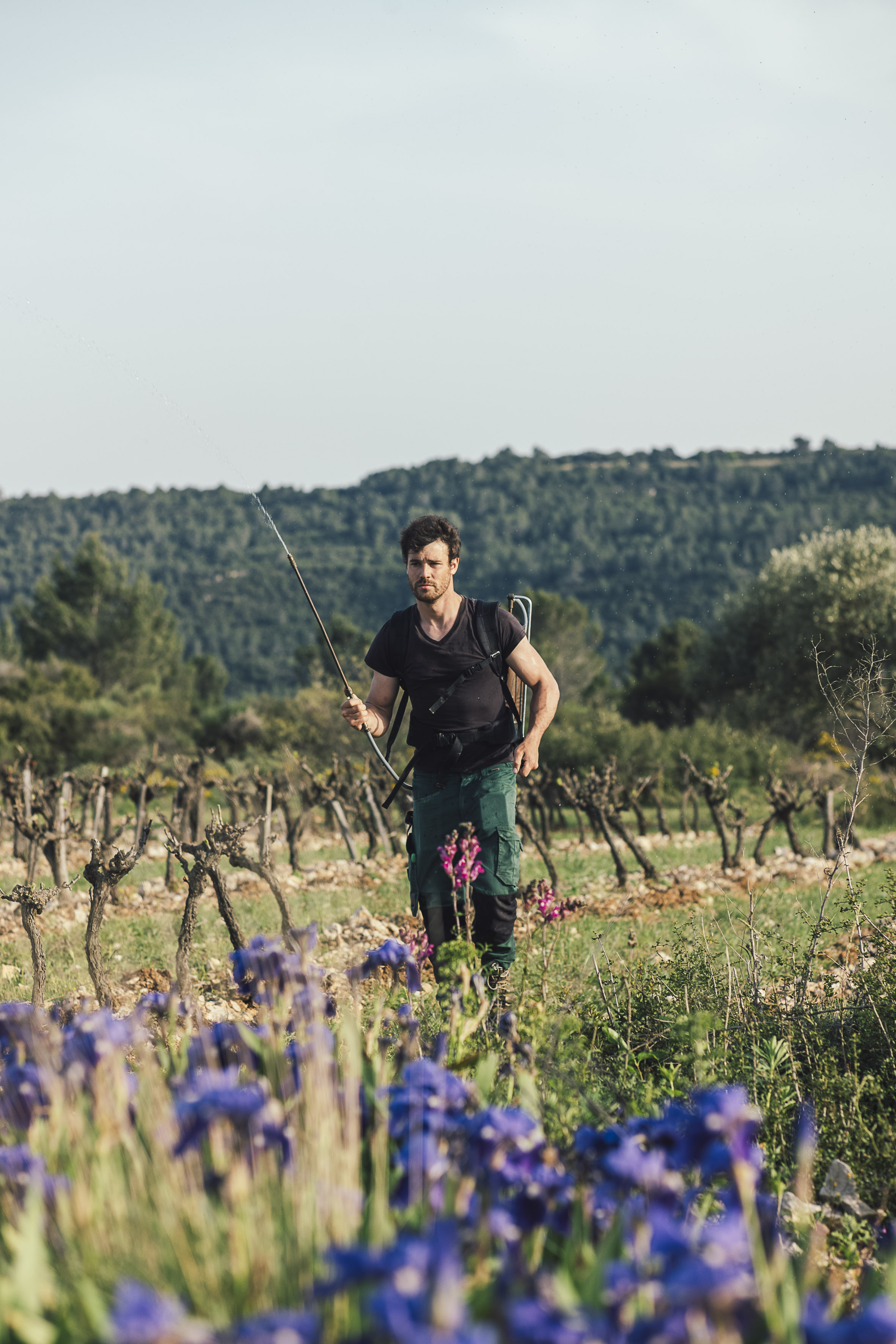
That is why we gather here the plants we need for vineyard treatments. Since 2026, we have used only these plants for phytotherapy and have stopped using copper and sulphur on this site. We are trying to complete a circle: the plants growing in this place seem to us best suited to managing its imbalances.
We avoid repeated tractor passes and therefore prefer tying and weaving vine shoots rather than trimming them. When trimming is necessary, we use hand shears and work carefully so that bunches are not left exposed to full sun. Summer wind and heat help keep the vines healthy, and we treat them only a few times. The vines should grow in harmony with the surrounding landscape. This is a privileged place, a preserved environment we hope to pass on without compromising it.
From selected plots on our karstic terroirs.
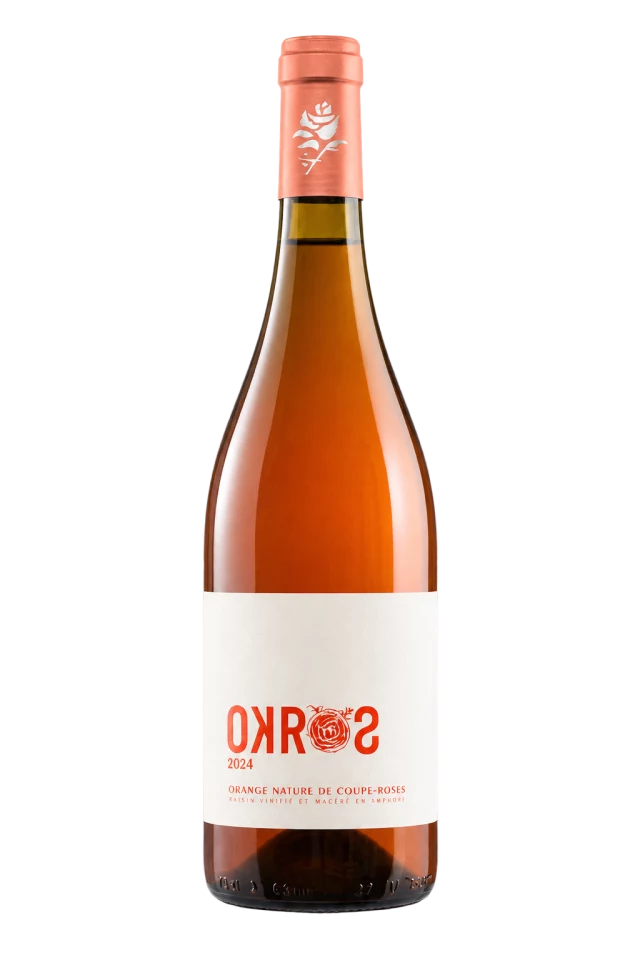
An orange wine made by macerating white, grey and black grape varieties.
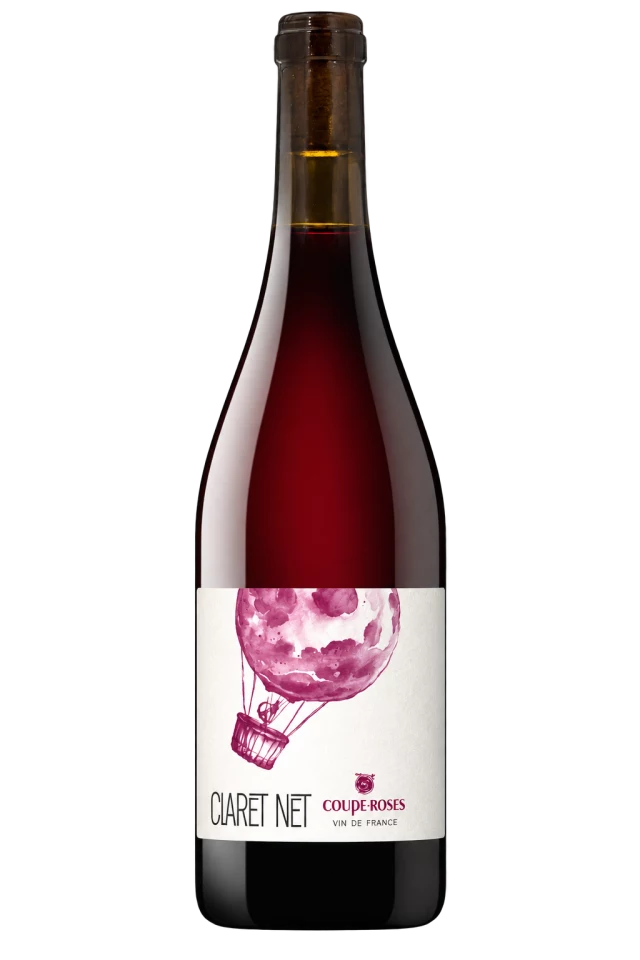
From the vineyards of the Causse de La Caunette, this is a wine made in a single night: light and fruit-forward.
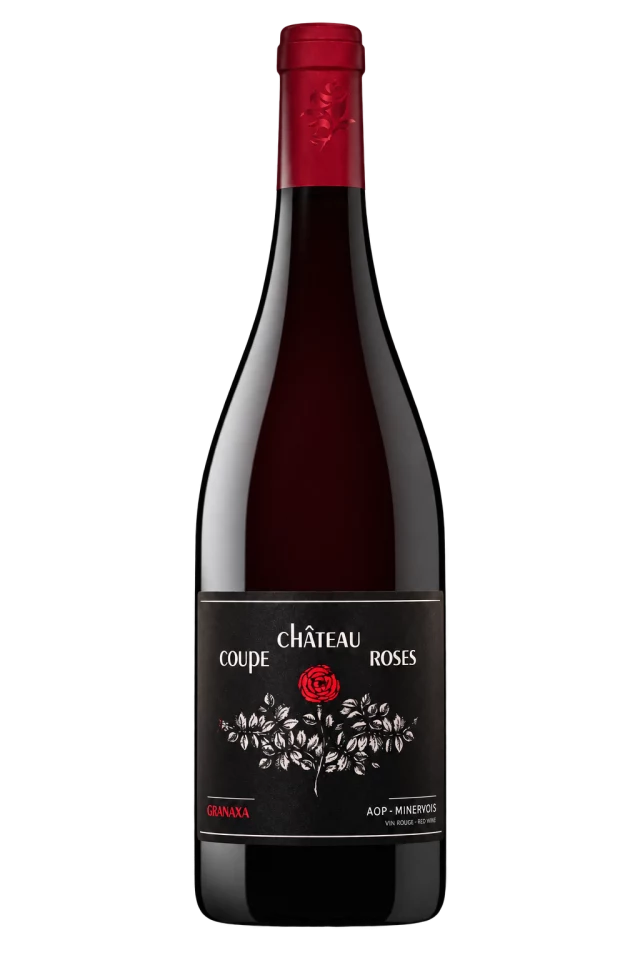
A single-vineyard selection of Grenache.