Winemaking
Guiding each terroir towards its own expression, without altering its nature
Choosing the Right Moment
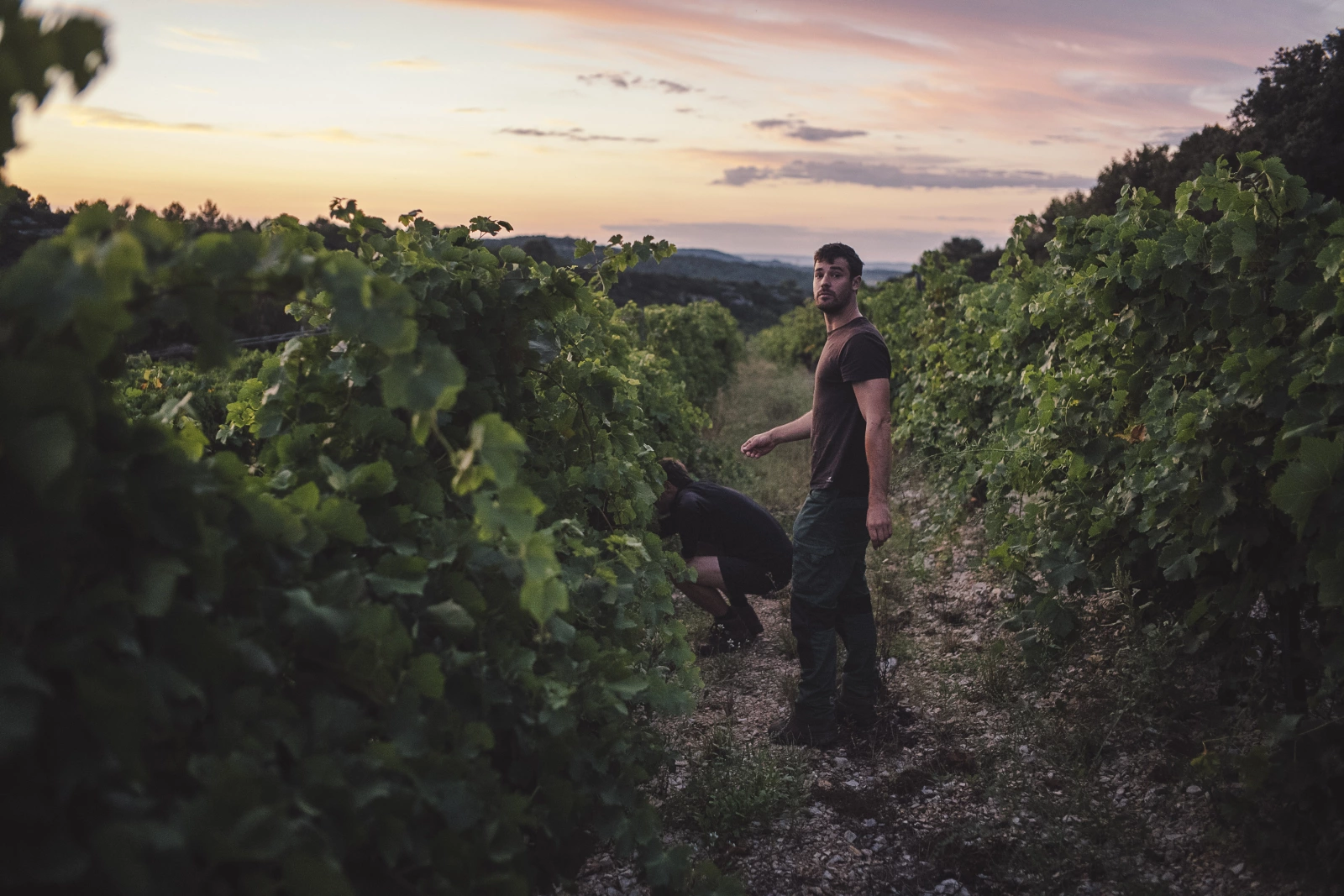
The challenge is to determine the right moment: that fleeting point when the vine has ripened its fruit enough to give what we consider the truest expression of its place.
Depending on the style we are seeking, the vintage, the health of the grapes, water stress and heat, we decide together when to harvest. Above all, we taste the berries, alongside measurements of density, which indicate sugar content.
When the fruit seems ripe and the acidity sufficient without being excessive, harvesting begins. Since 2015, harvest dates have tended to move ever earlier, with only a few exceptions. In 2014, we began picking on 24 September; in 2026, the first pruning shears were heard on 10 August. This reflects climate change, which places our vines under severe pressure through heat and drought. It also reflects changes to our winemaking methods, which in recent years have focused increasingly on freshness and on producing vibrant, sound wines.
Picking with Care
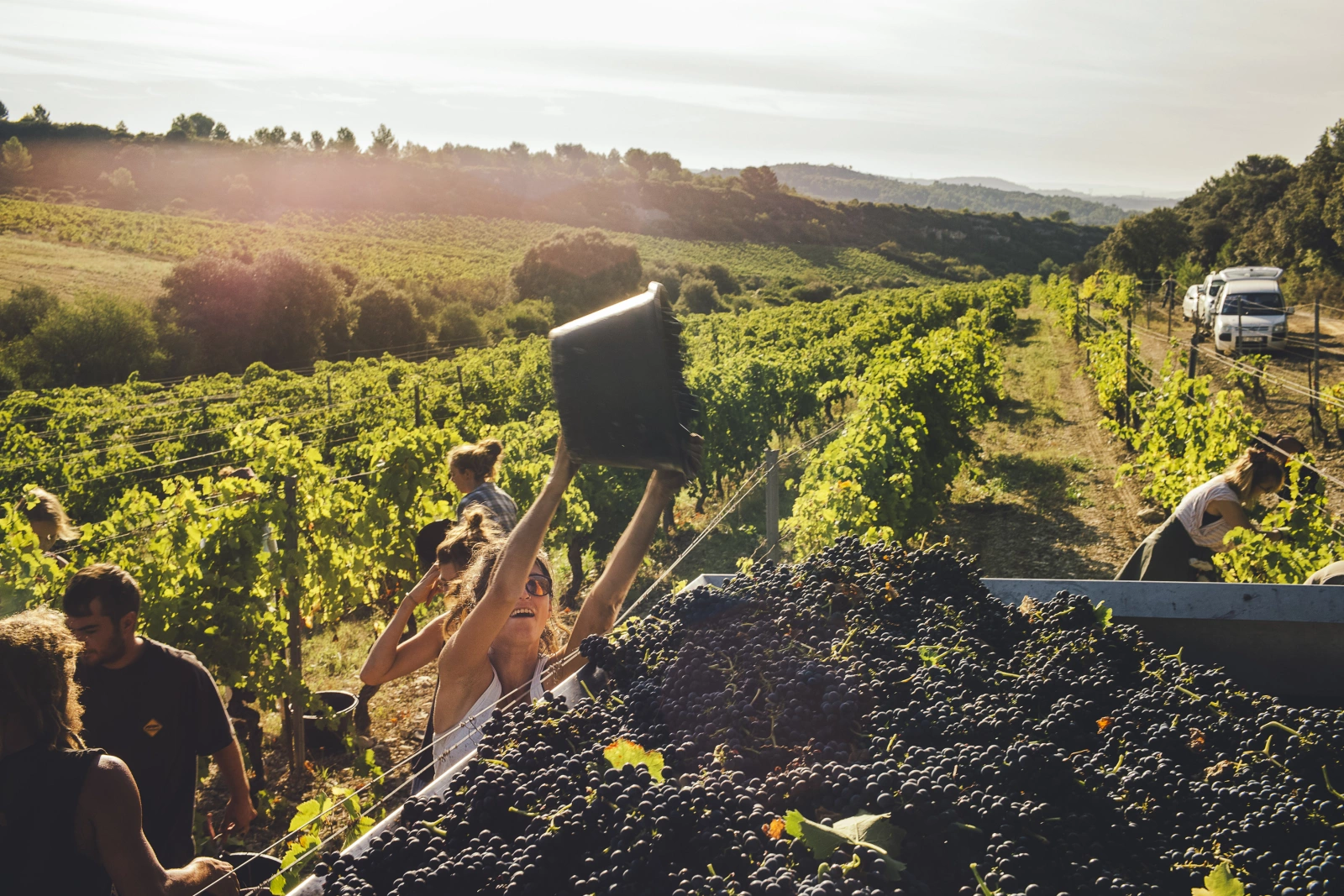
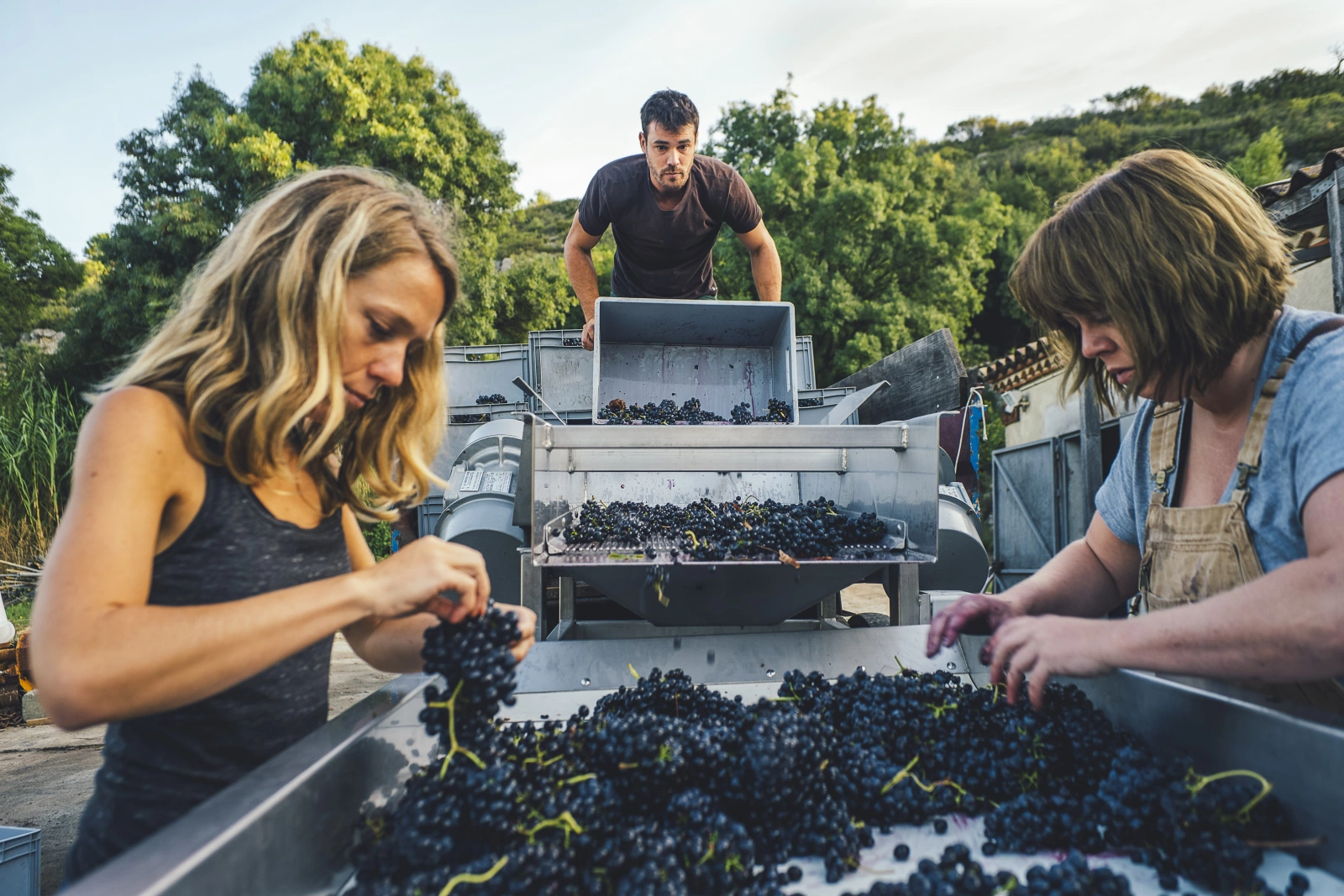
All our grapes are harvested by hand, into either crates or a stainless-steel trailer, depending on the wine being made.
We pick only in the morning, to keep the fruit cool and avoid excessive fatigue for our pickers and grape carriers.
Adapted to Each Plot
We receive the grapes at the winery according to the wine for which they are intended, their health and the quality of the stems, among other factors. Grapes harvested into crates generally pass over a vibrating table to remove dry matter and insects. They then move to a sorting table, where we remove anything unsuitable for winemaking, whether the bunches will be destemmed or kept whole.
Most of the time, given our climate, the grapes arrive in excellent condition and sorting is not always necessary. In particularly hot years, however, it can be useful to remove slightly shrivelled bunches or those with too many sunburnt berries.
The grapes are then moved either by crates for wines made in small volumes, or using a pump designed for handling grapes when working on a larger scale.
Without Artifice
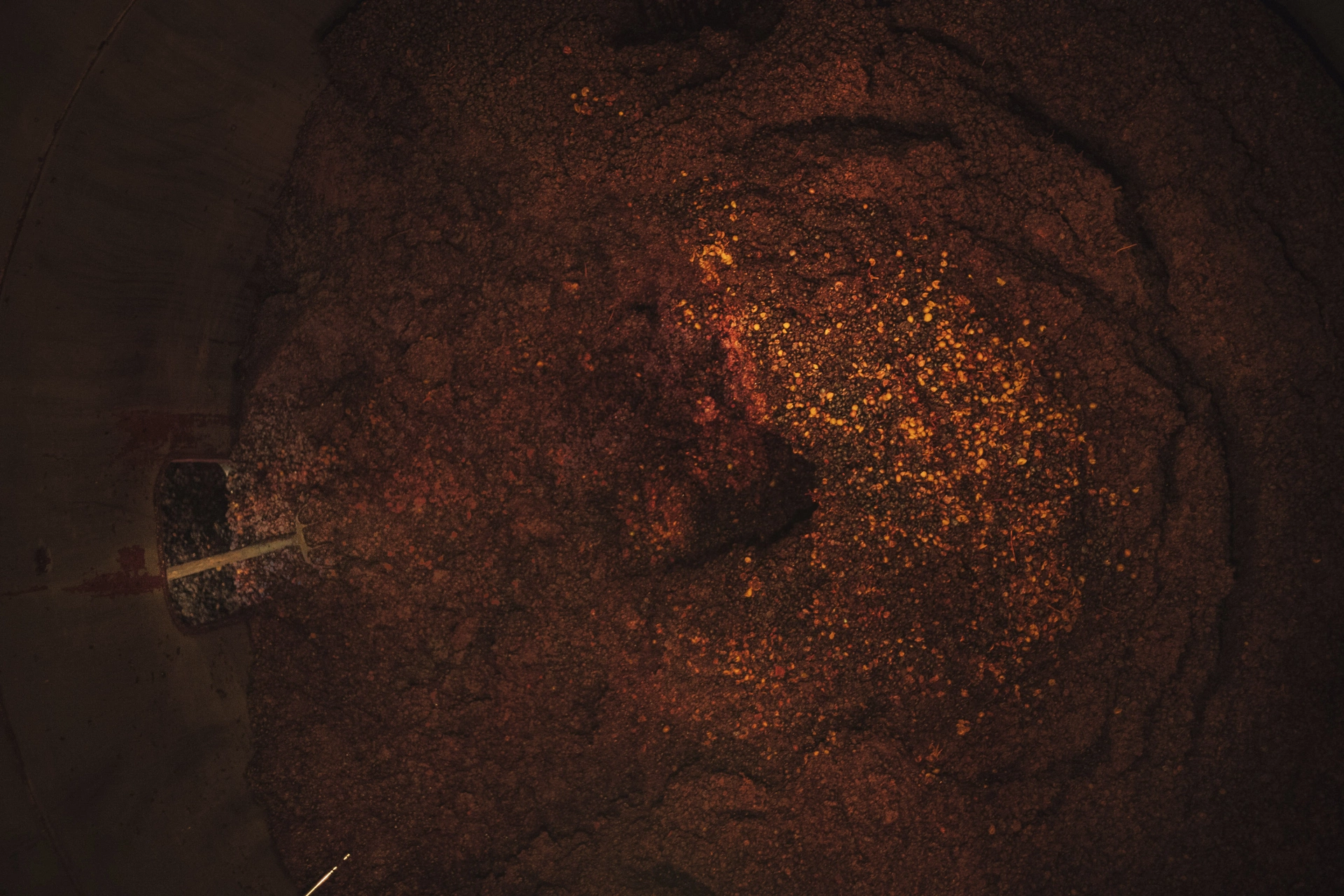
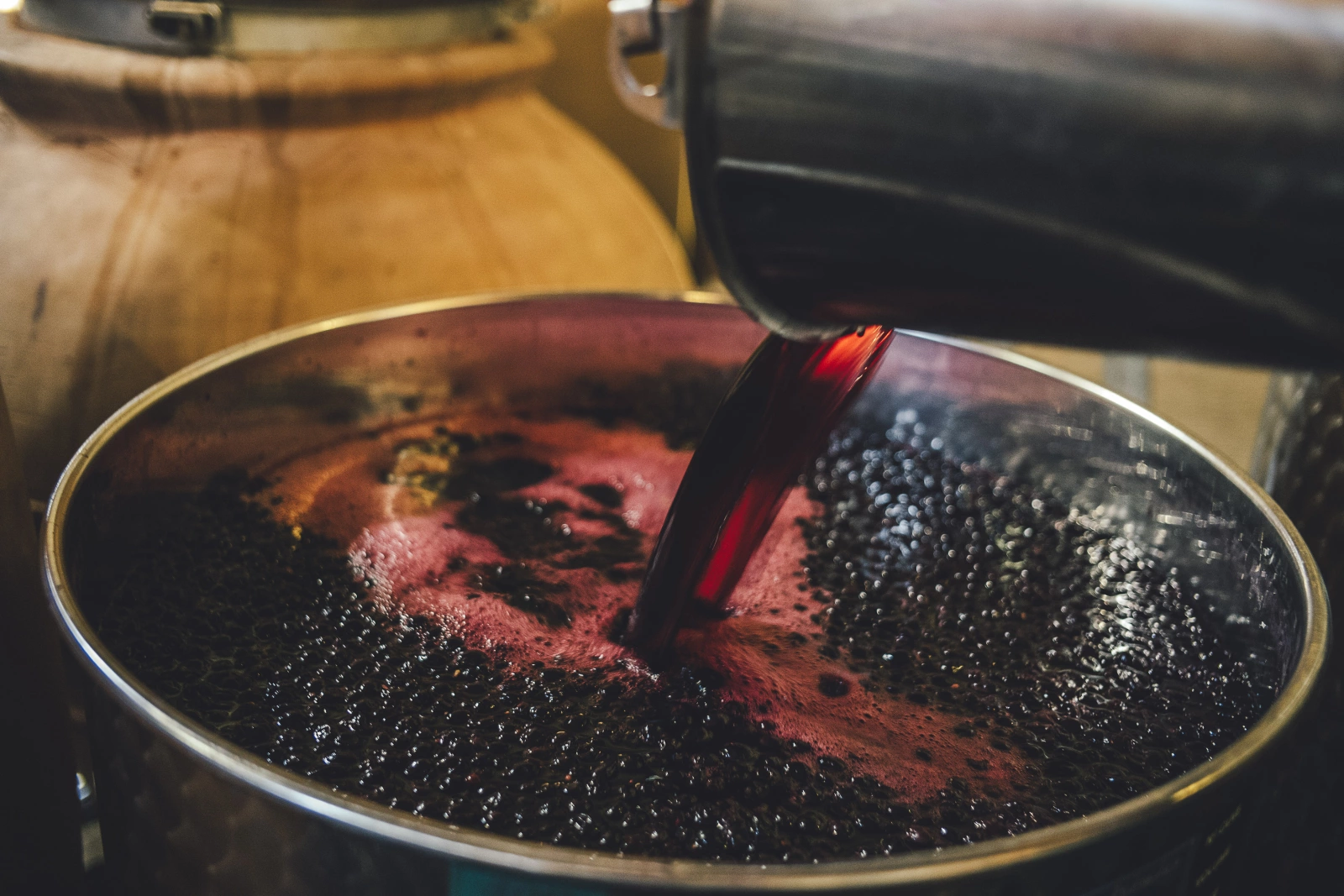
Once the grapes are in the vat or jar, winemaking begins. We prepare a fermentation starter, or pied de cuve, early in August, using grapes with low potential alcohol and high acidity. This helps us select the yeasts most likely to ferment smoothly; the low pH also helps minimise unwanted bacterial activity.
Then comes the transformation of grape into wine, a true transmutation. The task is to create stability from organic matter that would otherwise change and deteriorate. Through their activity, the yeasts reveal the place, of which they themselves are a part: the terroir begins to reveal itself. The whole process, from pruning to fermentation, seeks to draw the subtle from the coarse, from the unformed elements of earth and air. Once finished, the wine holds the space and time in which it came into being: a condensation of things we cannot fully grasp.
This transformation takes place without additives, so as not to distort the message we have been given. The winemaker's role is to support the wine as it takes shape. We guide it and help it regain its balance through physical interventions—stirring, oxygenation and lees stirring. Our emphasis is on prevention rather than correction.
We avoid extraction techniques such as punching down, pumping over and rack-and-return, favouring infusion instead. Every vat, jar and barrel is tasted once or twice a day to determine the right moment for pressing. Macerations generally last no more than about ten days.
When that moment comes, we press according to the size of the vessel, using either a small ratchet-operated vertical press or a pneumatic press. Fermentation then finishes in the liquid phase. We no longer wait for all the sugar to be consumed before pressing, in order to avoid wines that would be too hard.
Maturation
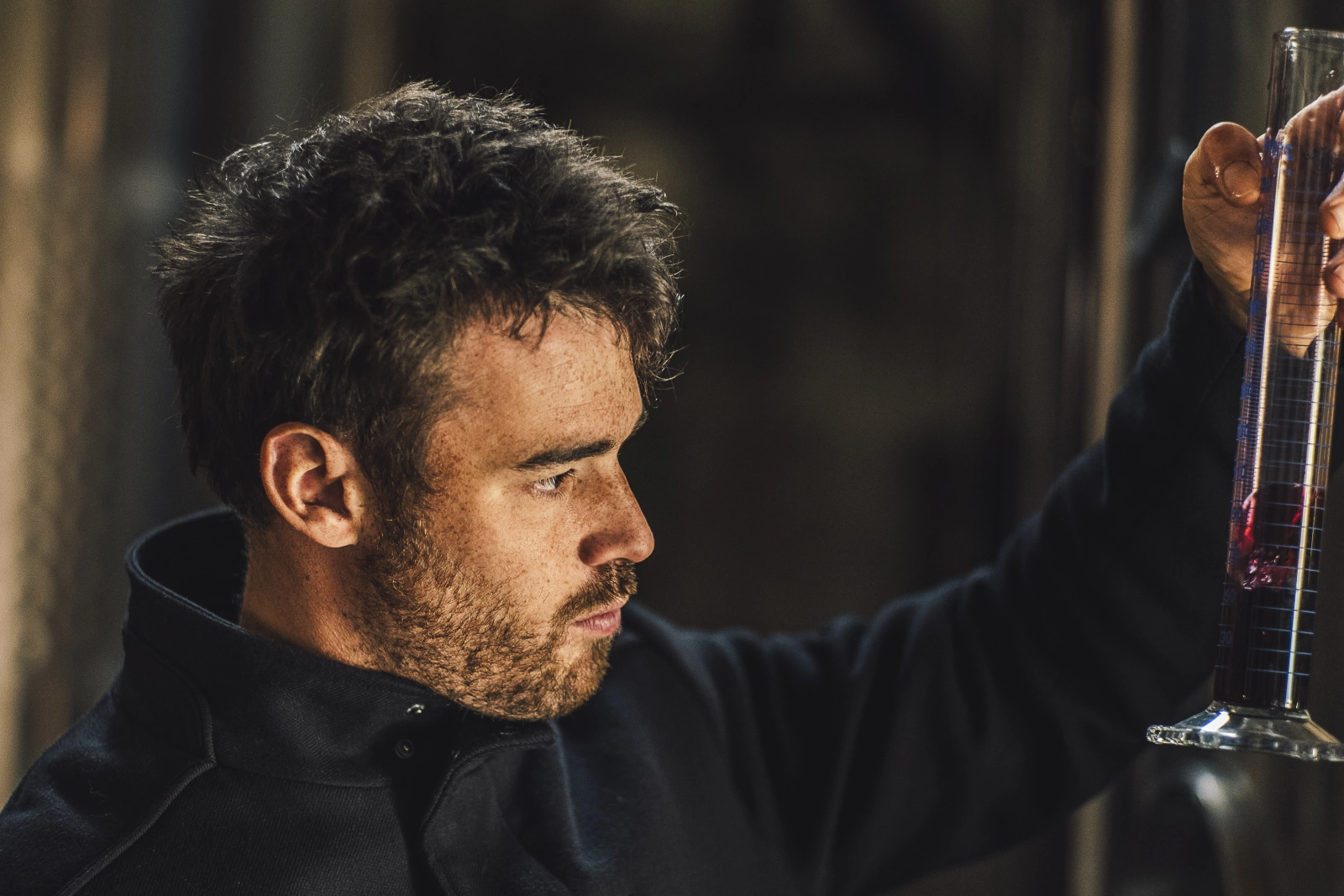
The turbulence of adolescence has passed; the wine now needs to mature according to its substance and structure. Depending on the vintage and the wine's complexity, we choose the time and vessel that seem right. Is it an energetic wine whose youthful exuberance we want to preserve? Or does it need more time and thought to mature its message, refining and purifying its expression?
We age our wines in stainless-steel tanks on their lees, in barrels and 500-litre demi-muids on full lees, or in stoneware jars. Working with the lees is important: making wine without added sulphites means paying close attention to oxidation and reduction, so as to avoid a slow decline in the wine's character and energy.
After winter, with the renewal of March, we taste the rested wines and create our blends. Most vineyards already have a particular destination in mind at harvest. Yet each year is different, and we need to be sure of the quality of the wines before making a blend. The single-vineyard wines, by contrast, come directly from the plots whose character they convey.